

A ROOM CAN CHANGE A PERSON
A Threshold Field Note
There are rooms that ask the nervous system to remain alert at all times.
Bright lighting.
Constant notifications.
Voices layered endlessly over one another.
Spaces that never fully become quiet enough for a person to hear themselves think.
After enough exposure, the body adapts to overstimulation so thoroughly that softness begins feeling unfamiliar.
And perhaps this is partly why certain atmospheres affect people so deeply.
A dim room after midnight.
The sound of rain against glass.
A train moving somewhere in the distance.
A candle burning quietly while the rest of the house sleeps.
Not because these things magically solve suffering.
But because the nervous system recognizes environments before language does.
Long before people intellectualize safety, the body already knows what feels harsh and what feels gentle. It remembers the difference between spaces that demand performance and spaces that allow exhale.
This is why some people feel emotionally different in forests.
Why libraries feel sacred to certain people.
Why old cafés, oceans, candlelight, fog, distant thunder, and soft music continue appearing throughout human memory and ritual.
Atmosphere shapes perception more than most people realize.
A room can increase vigilance.
A room can soften grief.
A room can make a person feel witnessed by themselves again.
Perhaps this is also why intentional spaces matter in spiritual practice.
Not because objects themselves hold all the power.
But because environments quietly teach the body how to arrive differently.
To slow down differently.
To breathe differently.
To listen differently.
Some forms of care do not arrive through advice.
Sometimes they arrive through softer lighting.
Through slower sounds.
Through spaces that ask nothing from you except presence.
And sometimes, that alone is enough to begin changing a person.
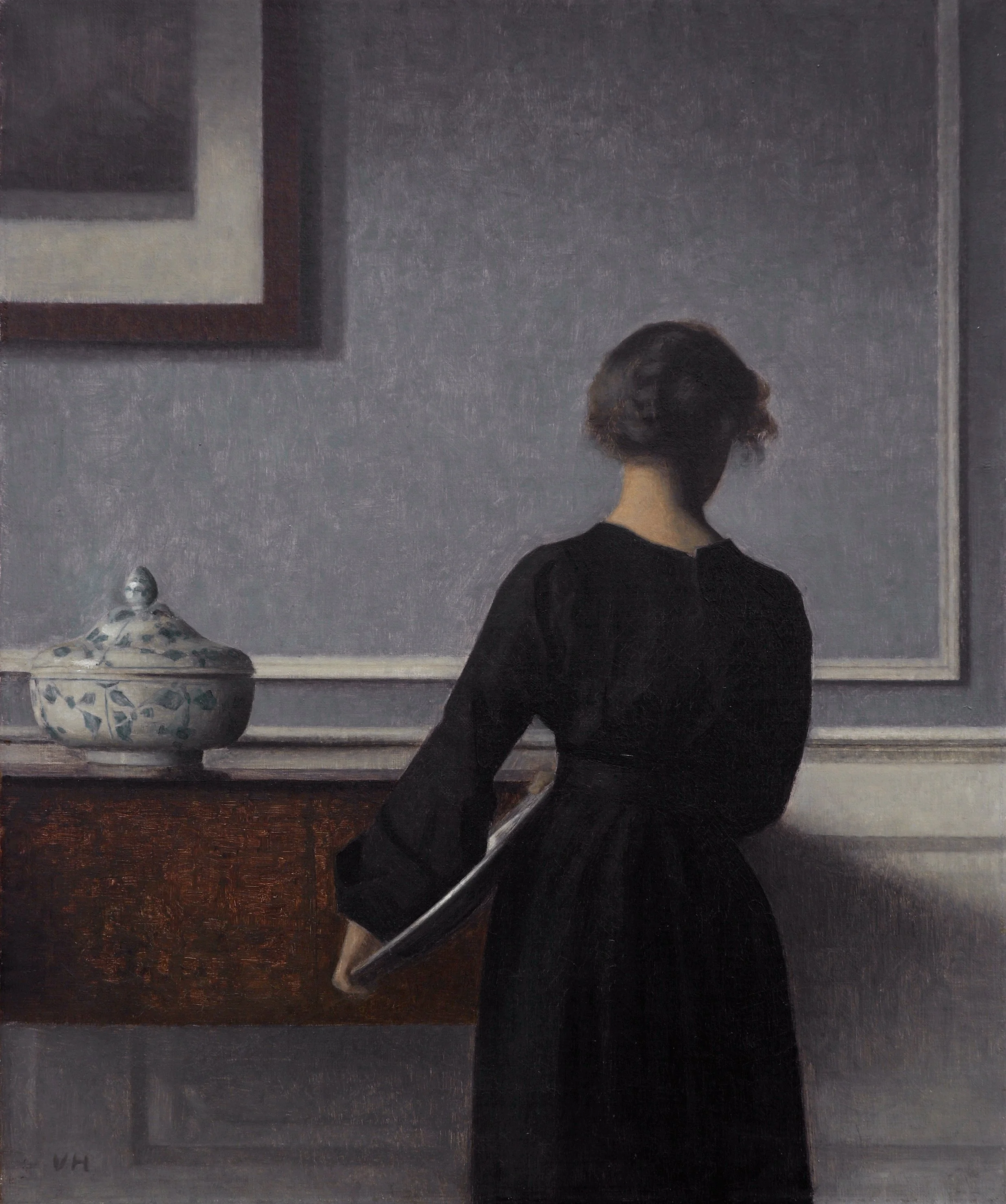
Interior with Young Woman Seen from the Back - Vilhelm Hammershøi
A quiet interior untouched by spectacle. Hammershøi’s work reflects the emotional architecture of solitude — the kind that does not isolate, but allows a person to finally hear themselves again.